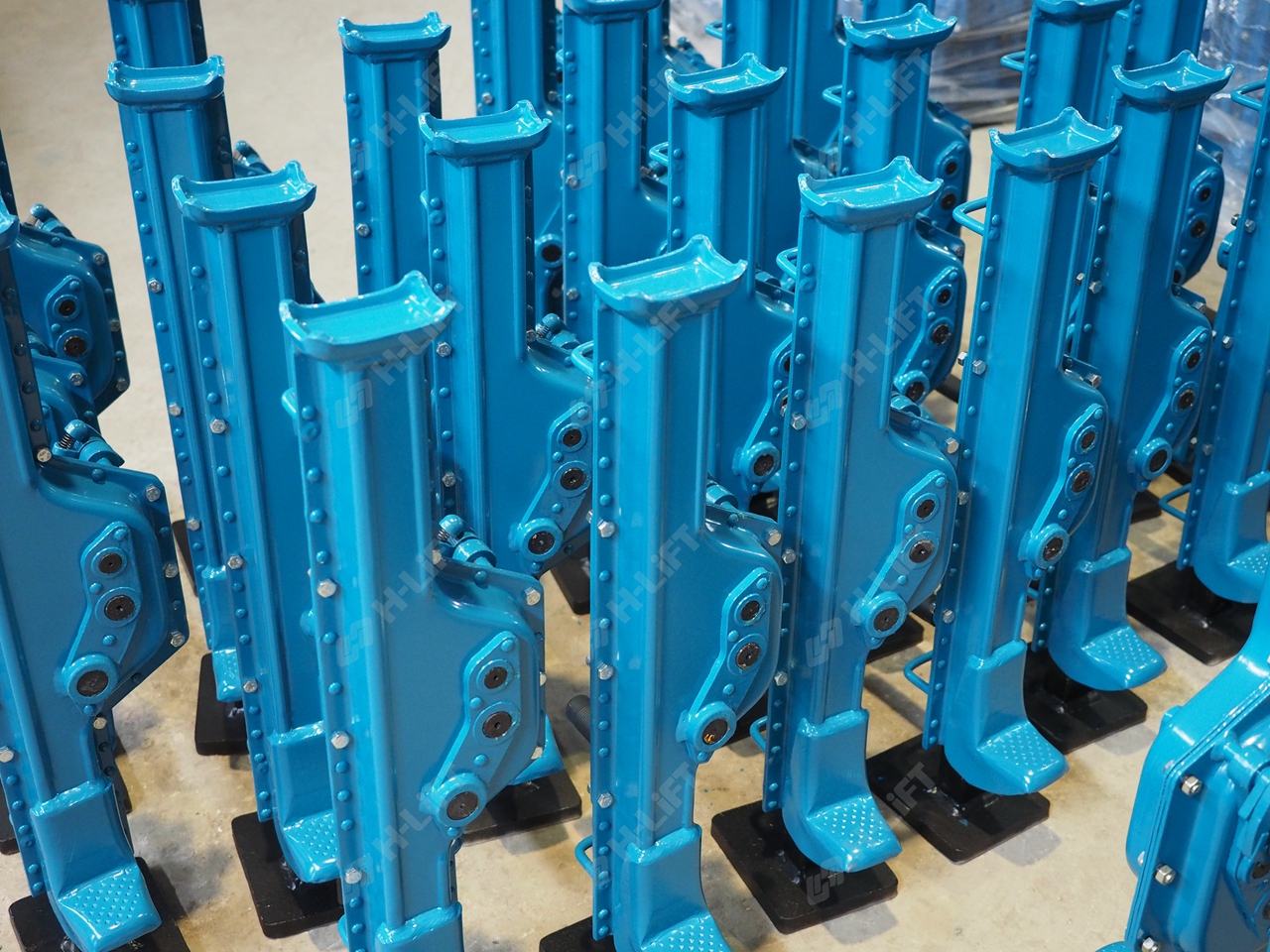
Mechanical rack jacks are essential tools in automotive, industrial, and warehouse settings, allowing workers to lift heavy loads with precision. However, improper use can lead to equipment failure, injuries, or even fatalities. To ensure safe operation, follow these best practices when using a mechanical rack jack.

1. Preparation and Inspection
Inspect the Jack: Before use, thoroughly examine the jack for any signs of damage, wear, or corrosion. Check the rack, screws, and moving parts for cleanliness and proper lubrication.
Verify Load Capacity: Ensure the jack’s rated capacity matches the weight of the load to prevent overloading, which can cause failure.
Prepare the Surface: Place the jack on a level, solid, and stable surface capable of supporting the load. Avoid uneven or loose surfaces that could lead to tipping or sinking.
2. Positioning the Jack
Correct Placement: Position the jack so that the load is applied evenly and in the correct plane. Use support packing if necessary to distribute the load properly and prevent tilting.
Center the Load: Ensure the load is centered on the support area of the jack to avoid uneven stress and potential failure.
3. Operation
Use Proper Technique: Turn the handle smoothly and steadily to lift the load, avoiding shock loads or sudden movements. Never exceed the jack’s maximum height or load limit.
Lift in Small Stages: Raise the load gradually in small increments, checking stability at each stage. This reduces the risk of load shifting or the jack slipping.
When lifting the load with the toe support, the force transmission should be as close to the rack housing as possible.
4. Supporting the Load
Use Jack Stands: Never work under a load supported solely by a jack. Always place appropriate jack stands beneath the load for additional support.
Secure the Area: Block wheels with wedges or bricks to prevent rolling, and ensure the surrounding area is free of obstructions and hazards.
5. Lowering the Load
Controlled Descent: Lower the load slowly and evenly, ensuring it remains stable throughout the process. Use the jack’s release mechanism carefully.
Final Checks: Once lowered, remove the jack and supports, and inspect the load and equipment before proceeding.
6. Maintenance and Storage
Regular Maintenance: Clean the jack regularly, and lubricate moving parts. Conduct periodic inspections for wear or damage.
Proper Storage: Store the jack in a dry, secure place, protected from impacts and environmental damage.
7. Safety Precautions
Never use the jack for long-term support or on vibrating or corrosive environments.
Avoid oblique loads, overextending the jack, or working beyond its rated capacity.
Do not leave the load suspended without supervision.
Do not use for lifting hazardous loads.
By following these safety practices, you can minimize risks and ensure efficient, accident-free operation of your mechanical rack jack.