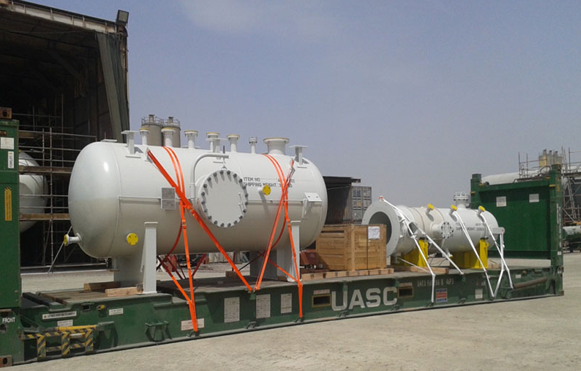
A one-way lashing system (also called non-return lashing or self-locking tie-down) is a specialized cargo securement mechanism designed for quick, efficient, and irreversible tensioning. Unlike traditional ratchet straps or cam buckles, it allows tensioning in only one direction, preventing accidental loosening during transport.
How It Works
One-Way Mechanism
- The strap passes through a self-locking bucklethat allows tightening but blocks backward movement.
- Similar to a check valvein mechanics—once tensioned, the strap cannot slip back.
Advantages
- Faster than ratchet straps – No cranking needed, just pull and lock.
- Prevents loosening – Vibration, shocks, or load shifts won’t slacken the strap.
- Lightweight & compact – Fewer moving parts compared to ratchets.
- High tension capacity – Some systems handle 5,000+ lbs (2,270+ kg).
- Durable – Often made from polyester webbing + reinforced buckles.
Common Applications
- Trucking & Logistics – Securing pallets, containers, and heavy machinery.
- Military & Emergency – Rapid load stabilization in field operations.
- Marine & Off-Road – Resistant to vibration and harsh conditions.
- Aviation – Lightweight cargo restraint in aircraft.
Limitations
- Not adjustable once locked (must fully release to re-tension).
- Some systems require training (unlike intuitive ratchets).
- Higher cost than basic cam buckles.
Final Recommendation
A one-way lashing system is ideal for:
✔ Fast, secure tie-downs (no ratcheting).
✔ High-vibration environments (won’t loosen).
✔ Frequent loading/unloading (saves time).
For heavy-duty industrial use, ratchet straps may still be better, but for speed and reliability, one-way lashing is a superior choice.


