In the lifting and rigging industry, safety is paramount. Among the critical components ensuring safe operations are webbing slings and round slings manufactured according to the EN 1492 standard. Understanding why the label on these slings matters can significantly impact workplace safety, compliance, and operational efficiency.
What Does the Label Tell You?
According to EN 1492-1 and EN 1492-2, for polyester webbing sling and round sling, the label must be blue. Here’s what you’ll find on the blue labels for H-Lift Webbing Sling to EN 1492-1 and Round Sling to EN1492-2.
Manufacturer’s name or logo – Ensures traceability and accountability.
Working Load Limit (WLL) in straight lift – The maximum safe load capacity in straight lift.
Standard reference (EN1492-1 for flat webbing slings, EN1492-2 for round slings) – Confirms compliance with safety regulations.
Traceability Code (serial/batch number) – Essential for inspections and record-keeping.
Material type (polyester) – Affects chemical, UV, and temperature resistance.
Length – Critical for proper application and load distribution.
Length of flat webbing sling with eyes: measured from bearing point to bearing point.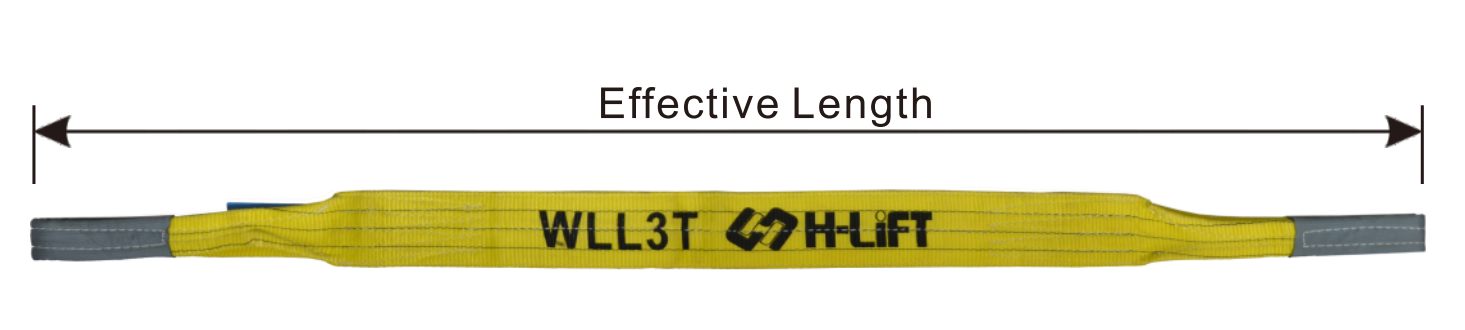
EWL (effective working length) of round sling or endless webbing sling: measured from bearing point to bearing point.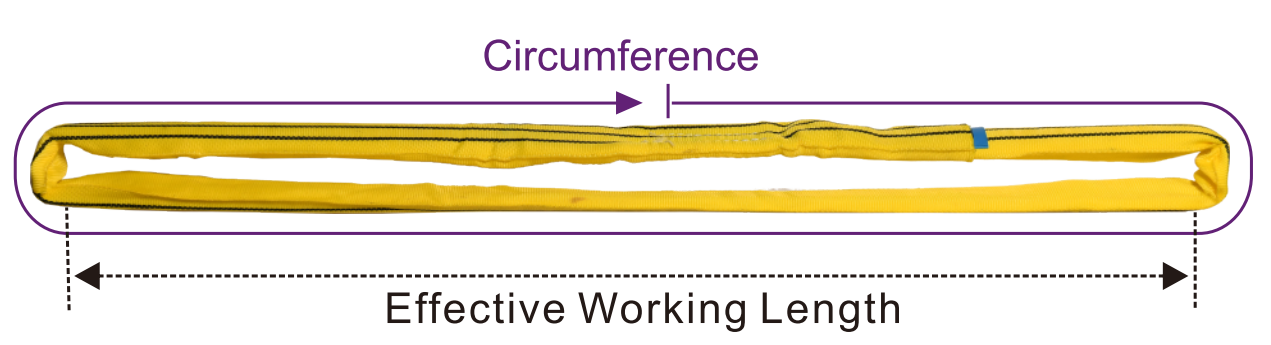
CE mark – Confirms compliance with the requirements of the Machinery Directive 2006/42/EC.
Safety factor: 7:1 according to the standard
Manufacturing month/year – Helps to assess remaining service life.
Inspection Calendar – Helps to track inspection.
Working load limit in different configurations (e.g., straight lift, choke hitch, basket hitch) – Critical for various modes of use.
Why Should You Never Ignore the Label?
1. Compliance & Legal Requirements
EN1492 isn’t just a recommendation—it’s a legal standard in many industries. Using unmarked or incorrectly labeled slings can lead to non-compliance fines, failed inspections, and even liability in case of accidents.
2. Safety & Risk Reduction
A missing or illegible label means you can’t verify:
The WLL, leading to potential overloading.
The material type, risking exposure to incompatible environments (e.g., chemicals, extreme temperatures).
The inspection history, making it impossible to confirm if the sling is still safe to use.
3. Operational Efficiency & Cost Savings
Properly labeled slings allow for:
Easier inspections – Ensuring only certified slings are in use.
Longer lifespan – Preventing misuse that leads to premature wear.
Reduced downtime – Avoiding sudden failures that halt operations.
What Happens When Labels Fade or Go Missing?
Labels degrade over time due to UV exposure, abrasion, and chemical contact. If a sling’s label is unreadable:
It should be removed from service immediately.
It cannot be legally used in regulated environments.
Replacement is the only safe option.
Optional Request about the Labels:
1. H-Lift is able to offer plastic transparent cover for reinforced label protection, to extend the label lifespan.
2. QR code can be printed on the label.
3. RFID (Radio Frequency Identification) tag can be attached to the label.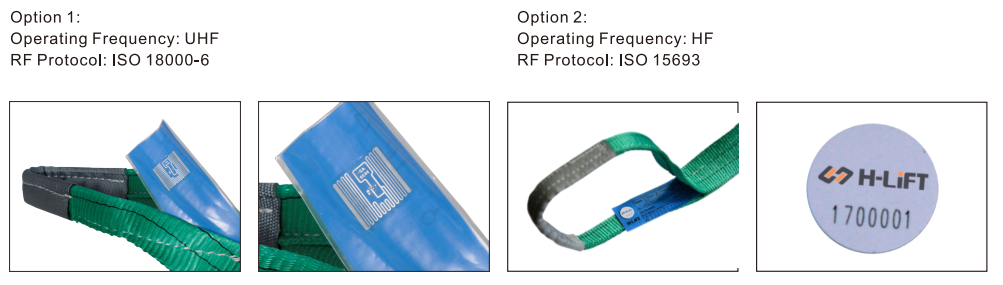
Conclusion
The label on your webbing or round sling isn’t just a simple attachment—it’s your first line of defense against accidents, compliance issues, and unnecessary costs. Always:
✔ Inspect labels before use.
✔ Replace slings with damaged or missing labels.
✔ Choose EN1492-compliant slings from trusted suppliers.


