Facebook
  • Hand Winch HW-E type
  • Hand Winch HW-E type
  • Hand Winch HW-E type
  • Hand Winch HW-E type

Hand Winch HW-E type

No.4202

The H-Lift HW-E Type Hand Winch is a manually operated worm-gear winch designed for lifting, pulling, and hoisting heavy loads in construction, marine, automotive, and industrial applications. Featuring a robust drum, gear mechanism, and secure handle, this winch provides reliable operation where electric power is unavailable or manual control is preferred.

  • Worm-gear mechanism for smooth load control
  • Integrated automatic brake with ratchet and pawl
  • Versatile mounting options (wall, floor, vehicle)
  • Wire rope drum with ample storage capacity
  • Ideal for lifting, pulling, and positioning applications
  • Technical Data

  • Safe Use of Winches

  • What is a hand winch ?

The HW-E Series Brake Winch is a heavy-duty manual lifting solution designed for safety and control. Unlike standard ratchet winches, it features an automatic mechanical brake that instantly locks the load whenever the handle is released, preventing dangerous free-spooling. With capacities up to 3 Tonnes, it is ideal for industrial hoisting and heavy pulling applications.

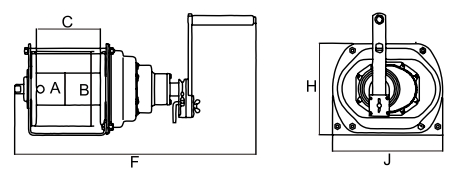
H-Lift Brake Hand Winch Side View
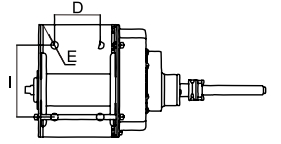
H-Lift Brake Hand Winch Front View
🛑 Automatic Load Brake

The mechanical brake engages automatically when the handle is released, holding the load securely at any height. No free-wheel mode under load ensures maximum safety.

💪 Heavy Lifting Capacity

One of the strongest manual winches available, with models ranging from 500kg up to 3000kg (3 Ton).

⚙️ High Gear Ratio

Precision-machined gears (up to 29.16:1) provide immense mechanical advantage, allowing a single operator to lift heavy loads with minimal effort (~18N).

⚓ Durable Construction

Heavy-gauge steel construction with a corrosion-resistant finish (Galvanized or Painted), suitable for harsh outdoor and marine environments.

Buying Guide: Why Choose a Brake Winch?

Standard Ratchet Winch: Good for horizontal pulling (e.g., boat trailers).
Risk: If the handle slips, the load can drop or the handle can spin wildly, causing injury.


HW-E Brake Winch (This Product): Essential for Vertical Lifting.
Safety: The friction brake automatically locks the drum. There is no "freewheel" mode under load, making it the only safe choice for hoisting.

Pro Tip: For any lifting application (hoisting), you must use a Brake Winch like the HW-E series. Standard ratchet winches are typically not rated for vertical lifting.

Technical Specifications

Model Capacity
(t)
Proof Load
(kN)
Wire Rope
(mm x m)
Gear Ratio Handle Length
(mm)
Min. Hand Force
(N)
Dimensions (mm) N.W.
(kg)
Product Code
A B C D E F H I J
HWE005 0.5 7.35 6.3 x 40 4.33:1 350 120 60 140 150 100 15 403 182 130 245 14.4 420200500
HWE010 1 14.7 8 x 40 12.19:1 350 120 76 175 154 110 18 443 214 170 266 19.7 420201000
HWE020 2 29.4 9 x 40 22.68:1 350 130 90 190 195 155 18 490 230 170 300 25.1 420202000
HWE030 3 44.1 12.5 x 40 29.16:1 350 180 100 230 205 155 18 549 296 170 365 44.3 420203000
✅ ALWAYS
  • Store and handle winches correctly.
  • Inspect the winch, rope, and accessories before use and before placing into storage.
  • Ensure mounting and suspension points are secure and suitable for the full loads that will be imposed.
  • Lift the load just clear, then halt for a short period to ensure the integrity of the brake or sustaining mechanism before completing the lift.
  • Use a speed appropriate to the specific application.
  • Keep hands and feet clear of ropes, drums, and moving parts.
❌ NEVER
  • Raise loads by revolving the drum in the opposite direction to that indicated.
  • Use winches with loose or insecure handles.
  • Use the pawl to arrest descending loads.
  • Use winches if the rope is twisted or trapped.
  • Overwind the rope on or off the drum.
  • Use winches for man-riding applications unless they are specifically designed and certified for that purpose.
⚙️ Selecting the Correct Winch

Winches are available for manual or power operation in a range of capacities, designs, and mounting arrangements. Plan the lift by taking any statutory requirements and the following into account:

  • Type of Winch: Manual, electric, pneumatic, or other operation.
  • Mounting: Wall, floor, lorry/vehicle, etc.
  • Capacity: Required load limit and rope drum storage.
  • Speeds & Control: Single speed, dual speed, push button, pull cord, lever, remote, etc.
  • Rigging Arrangement: Diverters, pulley blocks, anchorage, suspension points, and imposed loads.

Note: Consult the supplier if the winch is to be used in high-risk areas, exposed to elements (water, steam), hazardous substances (acids, chemicals), or extremes of temperature.

📦 Storing and Handling
  • Condition: Never return damaged winches or ropes to storage. They should be dry, clean, and protected from corrosion.
  • Temporary Applications: Remove the rope for separate storage or wind it fully onto the drum and lash in position to prevent damage.
  • Left In-Situ: Remove pulleys and wind the rope fully onto the drum. If not possible, position pulleys to protect them from damage and ensure they present no danger to personnel. Isolate any power supply.
🛡️ Safe Operating Procedures
  • Pre-Check: Do not use defective winches, ropes, or pulleys. Check that mounting/suspension points are secure. Do not use timber bearers.
  • Rigging: Ensure sheaves are correct for the size and type of rope, fleet angles are not too great, the rope is not twisted, and the load is free to move. Check operating handles are secure.
  • Test Lift: Raise the load just clear and halt the lift to ensure the integrity of the brake and slinging arrangement.
  • Speed Control: With manual winches, use only the slow speed to raise/lower loads. With power winches, select a speed appropriate to the operation.
  • Brakes: Ensure oil, water, or foreign matter does not contact lined brakes.
  • Direction: If the direction of rotation is indicated, the winch must raise the load when turning in that direction.
  • Clearance: Check rope and load travel paths are clear. Maintain a clear view to avoid accidents.
  • Drum Rules: Do not overwind the rope on or off the drum. Two turns must always remain on the drum (unless manufacturer specifies more).
  • Body Safety: Keep fingers, toes, and clothing clear of ropes, pulleys, drums, and other moving parts.
⚠️ In-service Inspection and Maintenance

Follow the specific maintenance instructions issued by the supplier. These should be incorporated into the site maintenance program. Regularly inspect the winch and, in the event of the following defects, refer the winch to a Competent Person for thorough examination:

  • Insecure mounting or loose/missing bolts.
  • Distorted winch frame.
  • Chipped or cracked rope drum flanges.
  • Loose or pulled rope anchorage.
  • Worn ratchet, pawl, or slipping brake.
  • Rope worn, winding incorrectly, or broken wires.
  • Gears worn or not positively locating.
  • Any other visible damage, corrosion, or operational faults.

A hand winch is a manually operated mechanical device designed for lifting, pulling, and hoisting heavy loads. It consists of a drum (spool), a handle, and a gear mechanism. Turning the handle engages the gears to wind or unwind a wire rope, allowing the user to manipulate heavy objects with mechanical advantage.

⚙️ Manual Operation

Relies entirely on human effort. The operator turns the handle to wind the cable in or out, making it independent of electricity or fuel sources.

🧳 Portability

Compact and lightweight designs make them easy to transport and install in remote locations where powered equipment is not practical.

⚖️ Weight Capacity

Available in a wide range of sizes, from small models for light pulls (a few hundred kg) to heavy-duty industrial models capable of handling several tons.

🔒 Safety Mechanisms

Many models feature locking mechanisms (such as pawls or automatic friction brakes) to prevent unintentional cable release and maintain load stability.

🎯 Controlled Operation

Offers precise control, allowing the operator to stop, start, and adjust the lifting or pulling speed instantly as required by the task.

Versatile Applications

Hand winches are essential tools across construction, marine, automotive, and recreational industries. Common uses include:

  • Pulling or lifting boats onto trailers.
  • Hoisting loads onto elevated platforms.
  • Tensioning wire ropes and cables.
  • Securing heavy machinery during transport.
  • Assisting in off-road vehicle recovery.

Download

We use cookie to improve your online experience. By continuing browsing this website, we assume you agree to our use of cookie.